NOTICE
Parents or professionals identify developmental concerns.
info@vcanautismfoundation.org
+91 905 971 4636
Flat No-302, Rajamma Towers, Above Annapurna Megha Mart, Kukatpally

THE EARLIER WE UNDERSTAND, THE EARLIER WE CAN SUPPORT.
The early years are an important period of development. Children are learning to communicate, play, move, connect, understand, imitate and become independent.
When parents notice developmental concerns, getting the right assessment and appropriate support can help families understand what their child needs and identify meaningful next steps.
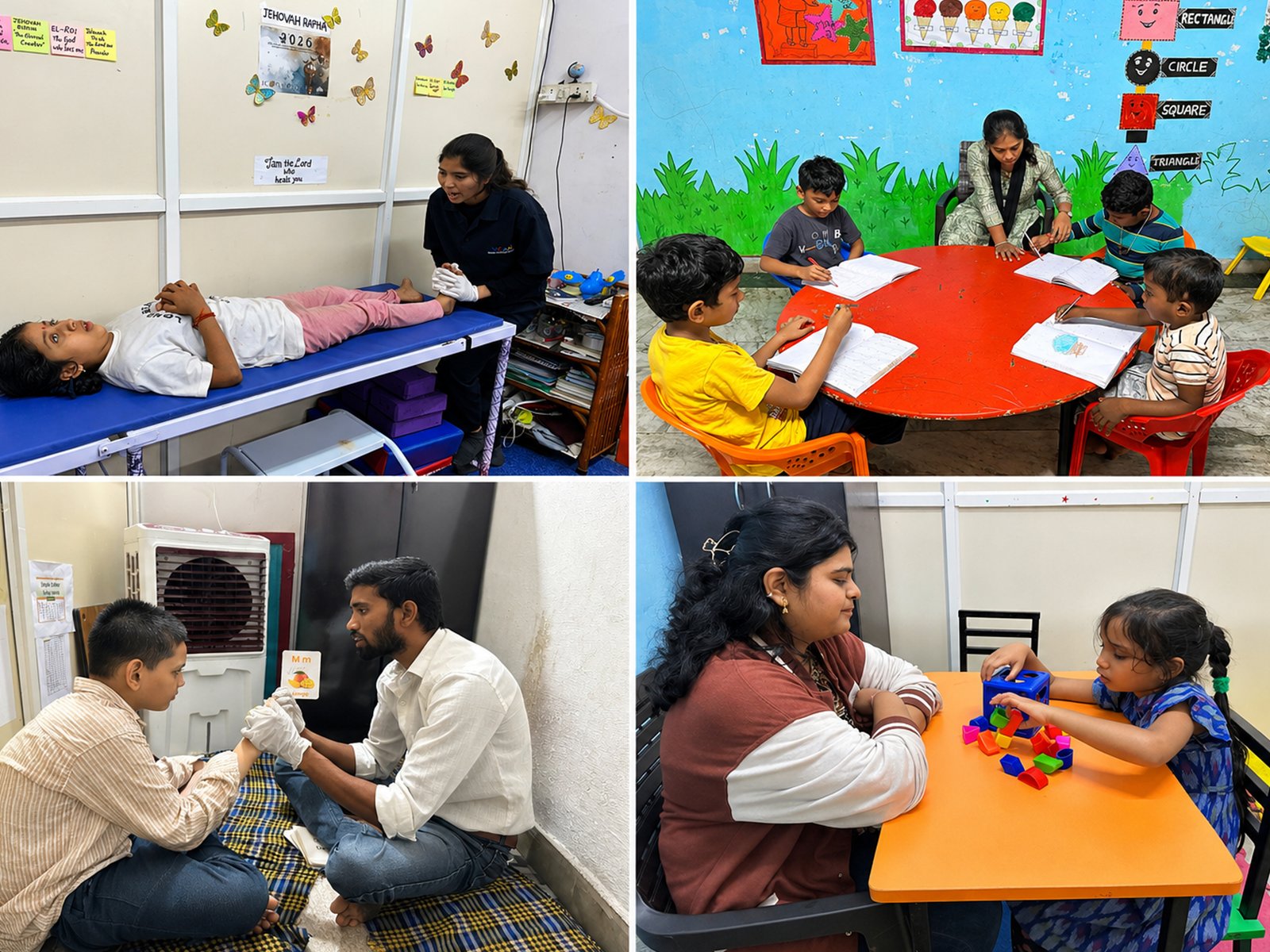
At V Can Autism Foundation, our Early Intervention Program is designed around the individual child—not a fixed package of therapies.
Parents may notice:
My child is not speaking yet.
My child doesn’t respond when called.
My child doesn’t interact with us.
My child doesn’t point or show things.
My child doesn’t play like other children.
My child is struggling with developmental milestones.
Parents or professionals identify developmental concerns.
Understand the child’s current abilities and support needs.
Set meaningful, individualized developmental goals.
Provide appropriate educational and therapeutic support.
Create opportunities to use new skills repeatedly.
Help children use skills across different people, places and routines.
Developing ways for children to Request • Respond • Choose • Express • Understand • Connect
Building opportunities for Eye Gaze/Attention • Joint Engagement • Imitation • Interaction • Turn-Taking • Shared Activities
Functional Play • Interactive Play • Imitation • Exploration • Problem-Solving • Early Learning
Activities can support Fine Motor Skills • Gross Motor Skills • Coordination • Balance • Hand Skills • Movement
Helping children gradually develop the ability to Attend • Engage • Follow Simple Directions • Complete Activities • Transition Between Activities
Early opportunities to develop Eating • Drinking • Hand Washing • Dressing • Toileting Routines • Simple Daily Activities


THE MOST IMPORTANT LEARNING DOESN’T HAPPEN ONLY AT V CAN.
Home • During Meals • During Play • During Routines • During Everyday Interactions
That’s why we guide parents to create meaningful learning opportunities within normal daily life.
Getting Dressed → Communication → Following Routine
Choice-Making → Communication → Self-Feeding
Imitation → Interaction → Social Communication
Self-Care → Sequencing → Independence
Walking → Safety → Community Participation
Routine → Communication → Independence